In 2021, the South African adult illiteracy rate was 10.5% which indicated an improvement of 2 percentage points from 12.5% in 2019.
The Department of Higher Education and Training (DHET) says around 4 million adults living in South Africa are functionally illiterate. Functionally illiterate refers to people who have basic reading and writing skills but are unable to function efficiently in a job that requires them to read and write fluently.
Government looked at the percentage of people who had not completed Grade 7 or equivalent programmes as an indicator of illiteracy rates. Grade 7 is the first grade of the senior phase in the South African basic education system.
The learning outcomes for individuals who passed Grade 7 English Home Language state that learners will be able to listen and respond appropriately and critically in a wide range of situations, communicate confidently and effectively, read and view information, write different kinds of factual and imaginative texts and be able to use language to think and reason.
In 2011, around 5.4 million adults living in South Africa did not complete Grade 7. This declined to 4.4 million in 2019 and to 3.9 million in 2021.
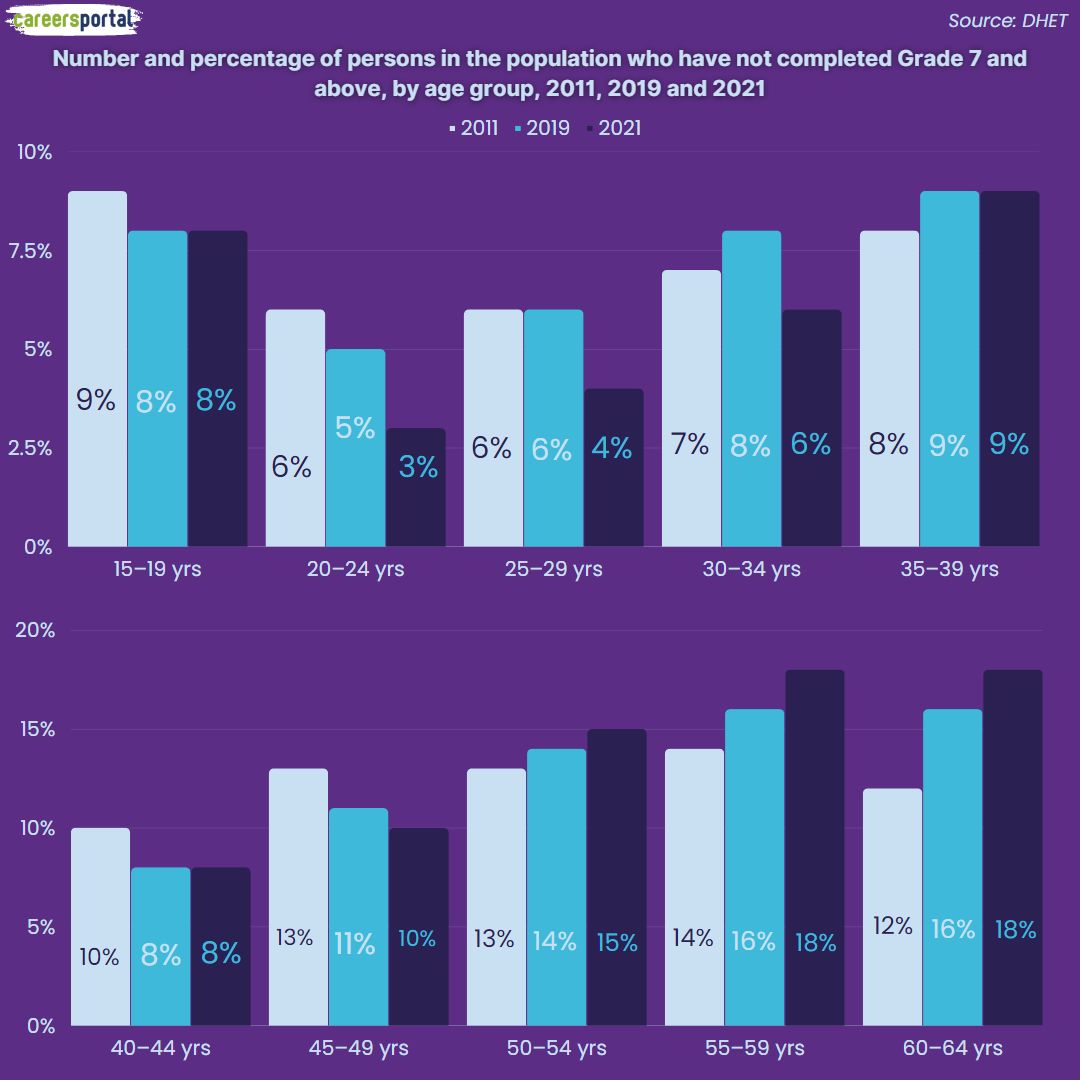
Women in South Africa have a higher illiteracy rate (56%) than men (44%). Illiteracy levels are more prevalent for black Africans compared with that of other race groups. The illiteracy rate for white adults was 0.1%, while that of black Africans was 11.9%.
The Department believes that this indicates that there is a demand for programmes that address the challenge of adult illiteracy in South Africa.
Illiteracy has no room in modern society since we live in the age of technology and information. Furthermore, the higher the number of people who have gone to school, the better the community and global competitiveness of the country.
They add that the illiteracy levels indicate that Central Education and Training (CET) colleges must be fully resourced to increase the opportunities for Adult Basic Education and Training (ABET) programmes.